Small Cross-Country Moves from NJ: What to Know | KIMS
Small moves cross country are typically defined as any long-distance or interstate relocation under approximately 2,000 pounds — roughly the contents of a studio, a one-bedroom, or a few selected rooms from a larger home. They’re common for post-grad relocations, life transitions, and situations where you’re only taking part of a household across state lines. And they work very differently from a standard residential move.
If you’re planning a small cross-country move from New Jersey — heading south from Burlington County, relocating a partial load to the mid-Atlantic, or moving anywhere interstate via KIMS long-distance service — this guide breaks down your real options, what they cost, and what most people don’t find out until they’ve already signed something.
On This Page
What Counts as a Small Cross-Country Move?
Your Options for Moving a Small Load Interstate
How LTL and Consolidated Shipping Works
What a Small Cross-Country Move Costs from NJ
The Delivery Window: What Most People Don’t Expect
Protecting Your Items on a Long-Distance Small Move
What to Look for When Hiring an Interstate Mover in NJ
How Keep It Moving Services Can Help
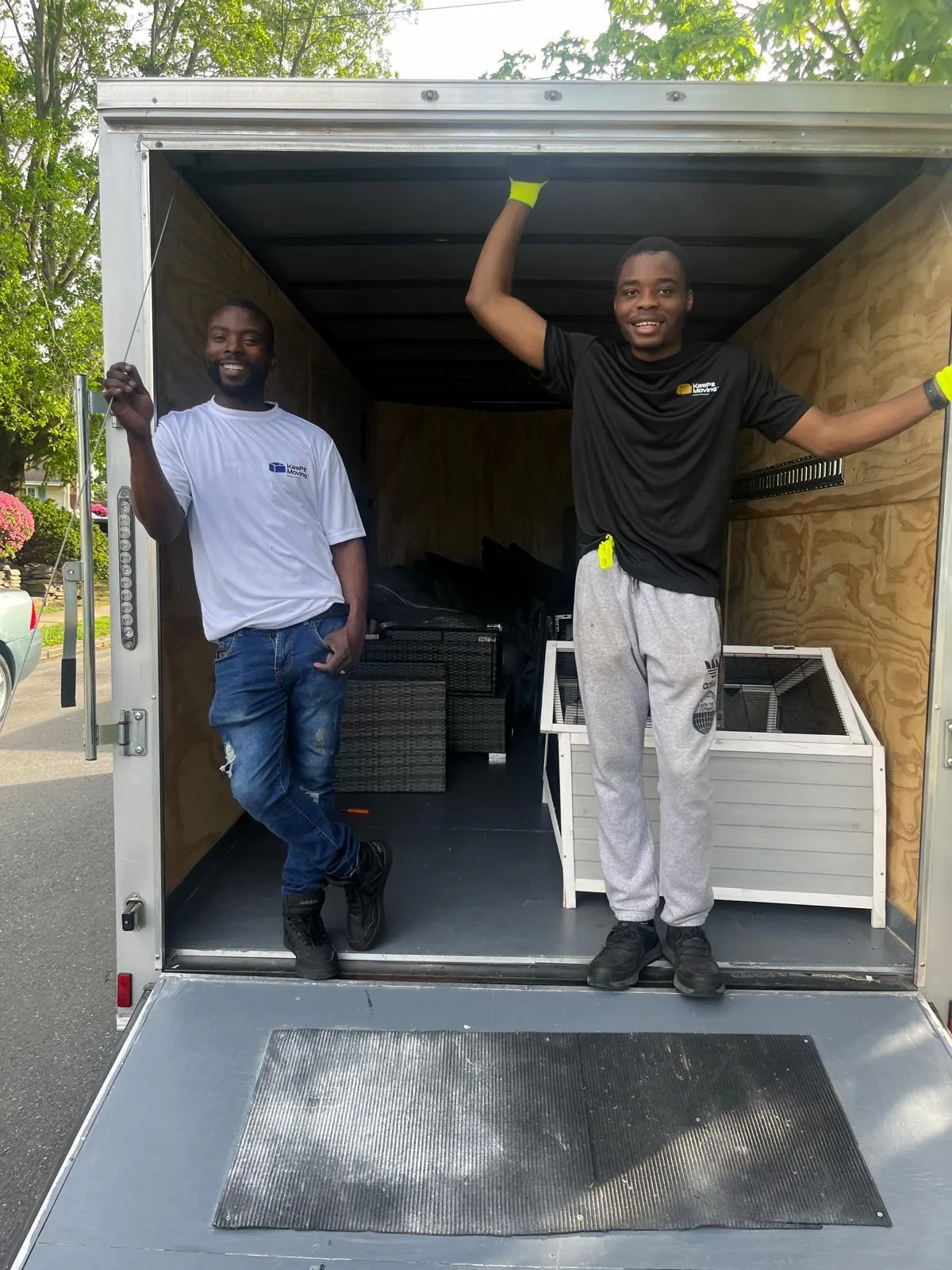
1. What Counts as a Small Cross-Country Move?
The moving industry doesn’t use a single universal definition, but most carriers draw the line at approximately 2,000 pounds for a “small” long-distance move. That typically maps to:
Studio or 1-bedroom apartment — furniture, a few boxes, minimal or no large appliances
Partial household — you’re leaving some furniture behind and taking only what you need
First apartment or post-grad move — minimal load, mostly soft goods and small furniture
Estate partial relocation — specific pieces going to a secondary home or family member across the country
If you can visualize it fitting in a small truck or a 7–8 foot shipping container, you’re in small-move territory. The distinction matters because the pricing model, logistics structure, and delivery timeline all differ significantly from a full household move.
A standard full-service interstate move is priced by weight × distance with dedicated truck space and a projected delivery date. A small move almost always runs on a shared or consolidated model — which changes both the cost and the timeline considerably.
2. Your Options for Moving a Small Load Interstate
There are several ways to get a small amount of belongings from New Jersey across state lines. Each trades off cost, speed, and control differently:
LTL freight (Less-Than-Truckload)
Your shipment shares truck space with other customers’ goods moving along the same route. The cost is significantly lower than a dedicated truck, but your delivery schedule runs around the full route — not just your stop. Think of it as a carpool for furniture.
Portable storage containers (PODS, U-Pack, 1-800-PACK-RAT)
You load the container at your own pace; the company picks it up and ships it to your destination. For a small move, this is a popular middle-ground: you control the packing timeline without needing to drive a truck. You can also hire a loading crew to pack it correctly.
Labor-only + rented container
You rent a container, book a professional crew to load it at origin, and arrange delivery on the other end. This is one of the most cost-effective structures for smaller loads — you pay for skilled labor for hire but not a full-service carrier’s overhead. Keep It Moving Services provides this for loads out of South Jersey.
Freight shipping for small items only
For very small moves — a few boxes, a single piece of furniture — UPS, FedEx, or specialized shippers can handle individual items. This isn’t a move in the traditional sense but works for the true minimalist.
Small-load moving specialist
Carriers that specifically focus on consolidated residential shipments under 2,000 pounds. They handle pickup, transport, and delivery, coordinated alongside other customers’ shipments running the same route. More hands-on than a container but often lower-cost than a standard mover on a minimum-charge full truck.
3. How LTL and Consolidated Shipping Works
Most people doing a small cross-country move end up in some form of consolidated or LTL shipping, so it’s worth understanding what actually happens between pickup and delivery.
Rather than driving your items directly from your NJ door to your destination, a consolidated carrier pools multiple customers’ shipments onto a single truck running the same general route. Your items are tagged, inventoried, loaded, and secured alongside other freight. At the destination city, they’re transferred to a local delivery crew.
What this means practically:
Your delivery date is an estimate — it depends on the route’s full schedule, not only your stop
Transit time is typically longer than a direct full-truck shipment: 7 to 21 days is common for coast-to-coast
Items change hands at least once (origin terminal → line-haul truck → destination terminal → local delivery crew)
The cost savings are usually significant — often 40–60% less than a dedicated truck for the same load. For non-fragile household goods in a properly packed and secured shipment, this tradeoff usually makes sense.
4. What a Small Cross-Country Move Costs from NJ
Rough ranges for a small move from New Jersey:
OptionEstimated cost (NJ to Southeast, ~1,000 lbs)LTL / consolidated moving company$1,500 – $3,500Portable container (PODS / U-Pack)$1,800 – $3,200Labor-only + rented container$800 – $1,800 (labor) + container feeStandard interstate mover (minimum charges)$2,500 – $5,000+
What shifts those ranges:
Distance — coast-to-coast is roughly double the Southeast estimate
Weight and volume — every additional 500 lbs on an LTL shipment bumps the rate
Time of year — peak season (May–September) adds 15–25% premiums across every option
Access at destination — no freight elevator, restricted delivery windows, or long carries add labor time and cost
The trap small-move customers most often fall into: comparing a consolidated carrier’s quote to a full-service mover’s minimum charge without realizing the minimum is set to cover a dedicated truck — whether you fill it or not.
5. The Delivery Window: What Most People Don’t Expect
There is almost never a guaranteed delivery date on a small cross-country move. You’ll get a window — sometimes a 7-day window, sometimes longer — and the specific day is confirmed once the truck is within range of your destination.
For consolidated moves, that window can stretch. If your items are loaded onto a truck making stops across six cities, your delivery schedule in Atlanta depends on how the whole route runs. Container moves give you more control — you set a pickup date, and the container arrives within a narrower carrier-confirmed window — but still not an exact guaranteed hour.
Plan for this before you book. Don’t schedule furniture delivery, cable installation, or contractor work around a single estimated arrival date. Have essentials with you — in your car or a suitcase — for at least the first week at your new place. Assume your belongings may arrive later than the initial estimate and have a plan that doesn’t depend on them being there on day one.
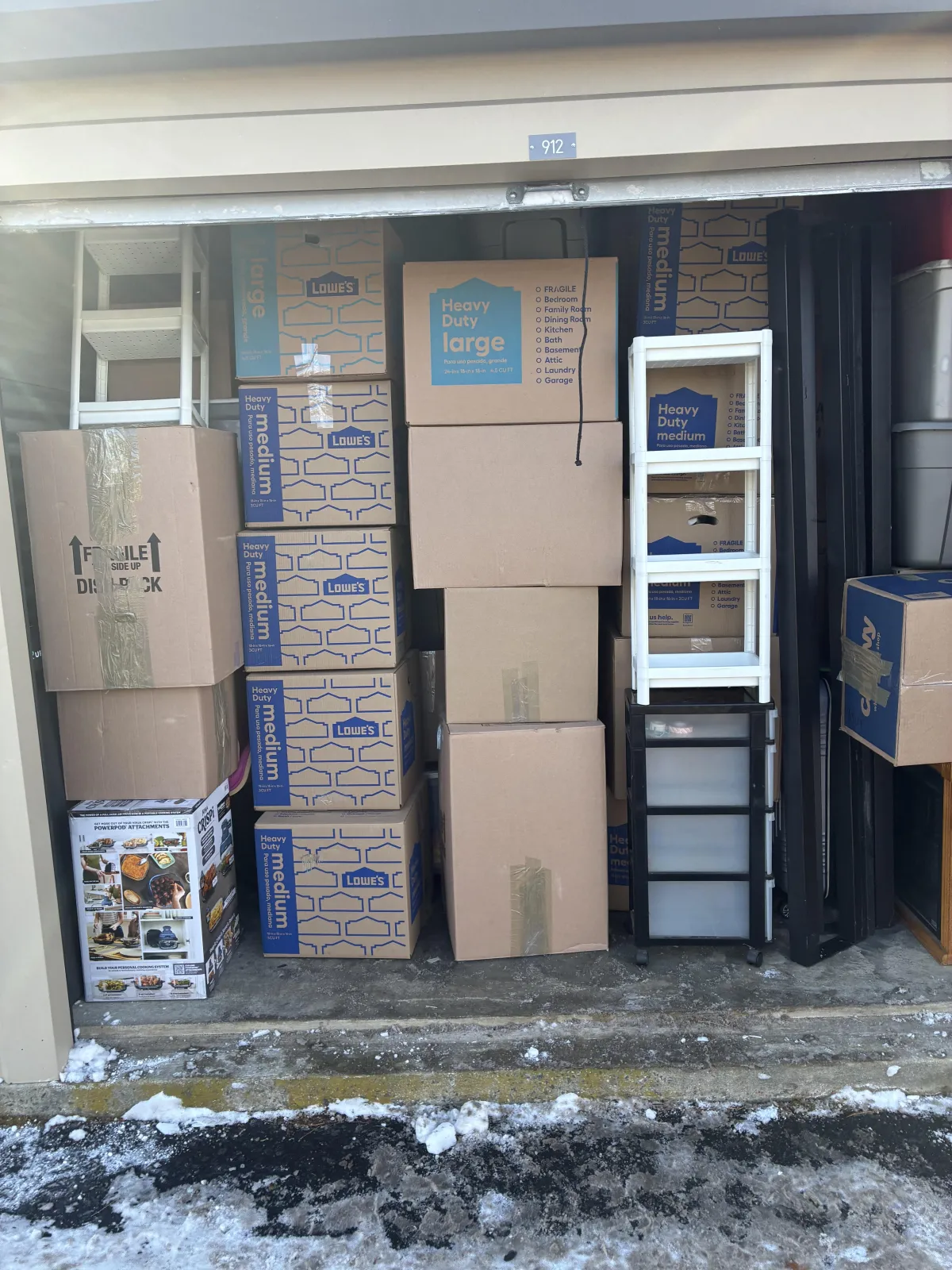
6. Protecting Your Items on a Long-Distance Small Move
The most common damage on a small cross-country move happens at two moments: loading (items not properly secured, shifting during transit) and transfer (items unloaded and reloaded at a terminal mid-route). Both are addressable.
Professional loading at origin
Even if you handle the shipping yourself via container, having a trained crew load it makes a measurable difference. Professional packing and loading means items are packed against the walls, heaviest pieces placed first and secured, fragile items cushioned and stacked correctly. A container loaded professionally travels differently than one loaded by a first-timer in two hours.
Proper wrapping for every large item
Furniture blankets, shrink wrap, and corner guards are standard on professional loads. They’re the reason items survive a 1,200-mile haul in a shared truck without arriving scratched or cracked.
Detailed inventory and condition photos at pickup
Document every item’s condition before it leaves — photos on your phone, descriptions in writing, and any existing scratches or wear noted on the carrier’s paperwork. This is your record if something arrives damaged and you need to file a claim.
Moving insurance beyond carrier liability
Basic carrier liability on an LTL shipment is typically $0.60 per pound. On a 20-pound TV, that’s $12 in coverage. Third-party moving insurance — available from specialty providers or sometimes through your renter’s or homeowner’s policy — gives you replacement-value or actual-cash-value coverage for what you’re actually shipping. For anything irreplaceable, the premium is worth it.
According to the American Trucking Associations’ Moving & Storage Conference, damage during interstate transport most often traces to improper loading and packing at origin — not to something that happened in the truck. Professional loading directly addresses the most common risk point.
7. What to Look for When Hiring an Interstate Mover in NJ
For any carrier or mover handling a cross-country small-load job out of New Jersey:
Active FMCSA authority. Any carrier transporting household goods across state lines must hold a USDOT number and active MC authority. Look up both at the FMCSA’s Protect Your Move tool before you pay a deposit.
NJ state license. For in-state moves, an NJPM number is required. For interstate movers working out of New Jersey, state registration applies too. You can verify any NJ mover’s credentials before you commit.
Know your estimate type. For weight-based LTL shipping, confirm whether your estimate is binding or non-binding. A non-binding estimate can adjust upward based on actual weight at the scale; a binding or not-to-exceed estimate caps your final bill. Understand what you’re signing before you hand over a deposit.
Carrier vs. broker. Ask whether they’re a direct carrier or a broker. A broker takes your booking and assigns it to a third-party carrier. That’s fine — just make sure you can look up the actual carrier’s FMCSA record, not just the broker’s.
8. How Keep It Moving Services Can Help
If you’re doing a small cross-country move from Burlington County or anywhere in South Jersey, KIMS can support the NJ end of it.
Labor for loading your container. If you’re shipping via PODS, U-Pack, or another container service, you can book a KIMS labor crew to load it professionally at origin. We bring the wrapping materials, pack the container correctly, and secure everything for the long haul. Your items travel better, and you skip the DIY fumble at the container door.
Full or partial packing before pickup. If you want everything wrapped and ready before the carrier arrives, professional packing is available as a standalone service. This is especially valuable for fragile or high-value items going on a consolidated shipment.
Direct interstate transport for the right load. For small moves that still warrant a dedicated truck rather than shared freight, Keep It Moving Services holds active federal authority (DOT 4197741, MC 1719484) and can scope direct transport out of NJ. Get a free estimate — we’ll tell you honestly whether a direct move, a container, or a hybrid approach makes the most sense for your load and destination.
Frequently Asked Questions
What qualifies as a small cross-country move?
Most carriers define a small move as anything under approximately 2,000 pounds — roughly the contents of a studio, a one-bedroom, or a selected partial load from a larger home. The size matters because it determines your pricing structure, shipping method, and delivery timeline options. Below a certain weight threshold, a consolidated or LTL shipment almost always costs less than a standard mover’s minimum charge.
How long does a small cross-country move take?
For a consolidated or LTL shipment, plan for 7 to 21 days from pickup to delivery, depending on the route and how your items fit into the carrier’s scheduled run. Container options (PODS, U-Pack) typically give you a tighter window. In either case, don’t plan around a single delivery date — have essentials with you for at least the first week.
How much does a small cross-country move cost from New Jersey?
A rough range for a 1,000-lb load from NJ to the Southeast: $1,500–$3,500 for an LTL or consolidated mover; $1,800–$3,200 for a portable container option. Coast-to-coast adds roughly 50–60% to those figures. Peak season (May–September) bumps rates across every option. Get a free estimate based on your actual load and destination.
What’s the difference between LTL and a standard moving company for a small move?
A standard full-service mover charges a minimum that’s often sized for a full or half-truck — whether you fill it or not. LTL freight and consolidated carriers charge by your actual weight and distance, so a small load pays a small price. The tradeoff is a longer, less predictable delivery window since your shipment shares a route with other customers.
Can I hire movers just to load my own container?
Yes — this is called labor-only or labor for hire. You rent the container yourself and book a crew to load it correctly at origin. It’s one of the most cost-effective structures for a small cross-country move: you get professional loading expertise without the full-service overhead. Keep It Moving Services provides this at Burlington County and South Jersey addresses.
What moving insurance should I get for a small cross-country move?
Don’t rely on the carrier’s included liability coverage for anything you’d miss. Basic carrier liability on an LTL shipment is typically $0.60 per pound — meaning a 20-pound laptop gets $12 in coverage. Third-party moving insurance or your existing homeowner’s or renter’s policy gives you actual replacement or cash value coverage. For any irreplaceable item, the premium is worth it.
Does Keep It Moving Services handle small cross-country moves out of NJ?
Yes — we hold active interstate authority (DOT 4197741, MC 1719484) and serve all 11 NJ counties for long-distance jobs. For small loads, we can help with labor-only loading, full packing for the NJ portion, or direct transport on jobs that warrant it. Get a free estimate and we’ll scope the best approach for your load and destination. We got you ✨
Ready to plan your small cross-country move from New Jersey? Get a free estimate from Keep It Moving Services — we’ll help you figure out whether a dedicated truck, a container, or a hybrid approach makes the most sense for what you’re moving and where you’re headed. We got you ✨
About the Author
Kesi Sistrunk-Lewis is the founder and owner of Keep It Moving Services LLC, a licensed and insured (DOT 4197741, NJPM 39PM00500100) moving company serving Burlington County and 10 other NJ counties. Kesi started the company at 21 and runs sales, estimating, and operations day to day — see licenses & certifications.


